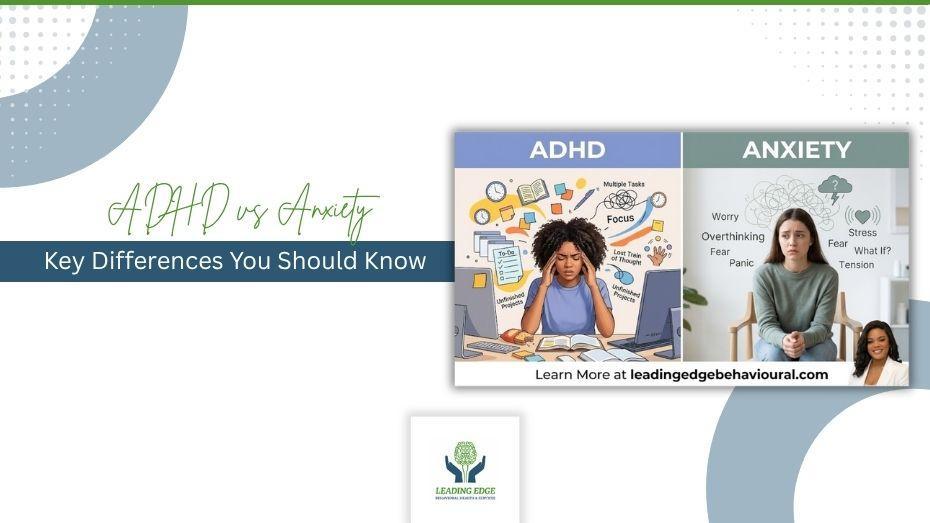
ADHD and anxiety are two commonly confused mental health conditions that share symptoms like poor focus, restlessness, and feeling overwhelmed. However, they are not the same. ADHD is a neurodevelopmental disorder that affects attention and impulse control, while anxiety is driven by excessive worry and an overactive stress response.
Understanding the difference between ADHD vs anxiety is essential because the wrong diagnosis can lead to ineffective treatment. If you’re experiencing ongoing focus issues, restlessness, or worry and aren’t sure which condition is affecting you, a professional psychiatric evaluation can provide clear answers and the right treatment path.
At Leading Edge Behavioural Health & Services, Dr. Oluwatobi offers expert telepsychiatry evaluations to accurately diagnose ADHD, anxiety, or both so you can get the right treatment. Book your appointment today and take the first step toward clarity and control.
What Is ADHD?
Definition of ADHD
Attention-Deficit/Hyperactivity Disorder (ADHD) is a neurodevelopmental condition that affects attention, impulse control, and activity levels. It is not a character flaw—it is a clinically recognized disorder linked to differences in how the brain regulates dopamine and norepinephrine.
Common Symptoms of ADHD
ADHD presents in three main areas:
- Inattention: difficulty focusing, forgetting tasks, losing items, struggling to follow instructions
- Hyperactivity: restlessness, inability to sit still, excessive talking, feeling constantly “on”
- Impulsivity: interrupting others, making quick decisions, acting without thinking
How ADHD Affects Daily Life
ADHD impacts time management, organization, relationships, and work performance. Many adults go undiagnosed for years, often internalizing shame or self-blame. Children are frequently mislabeled as unmotivated or disruptive.
With the right support and treatment, individuals with ADHD can function effectively and thrive.
What Is Anxiety?
Definition of Anxiety Disorders
Anxiety disorders involve persistent, excessive fear or worry that is disproportionate to the situation. Unlike normal stress, clinical anxiety does not resolve once the trigger passes—it becomes ongoing and disruptive.
Common types include:
- Generalized Anxiety Disorder (GAD)
- Social Anxiety Disorder
- Panic Disorder
- PTSD
Common Symptoms of Anxiety
- Excessive, uncontrollable worry
- Restlessness driven by internal tension
- Racing heart, sweating, chest tightness
- Shortness of breath
- Headaches and digestive issues
These physical symptoms reflect a nervous system stuck in a heightened stress response.
How Anxiety Impacts Health
Chronic anxiety disrupts sleep, weakens immunity, strains relationships, and leads to avoidance behaviors. Over time, it can increase the risk of depression and other co-occurring conditions.
ADHD vs Anxiety: Core Differences
1. Root Causes
- ADHD: Neurodevelopmental, present from early life, linked to dopamine regulation
- Anxiety: Driven by an overactive threat-response system (amygdala), often shaped by stress or trauma
2. Symptom Experience
- ADHD: Mind wanders due to need for stimulation
- Anxiety: Mind races due to fear and anticipation
3. Focus Problems
- ADHD: Distractibility
- Anxiety: Overthinking and mental fixation
4. Emotional Patterns
- ADHD: Intense but short-lived emotional reactions
- Anxiety: Persistent worry, tension, and dread
5. Behavioral Patterns
- ADHD: Impulsive, present-focused
- Anxiety: Avoidant, future-focused
Similarities Between ADHD and Anxiety
Despite their differences, ADHD and anxiety share overlapping symptoms:
- Difficulty concentrating
- Sleep disturbances
- Irritability
- Social and work challenges
They also frequently occur together. Research suggests that up to 50% of adults with ADHD also have an anxiety disorder, making accurate diagnosis more complex and more important.
ADHD or Anxiety: How to Tell the Difference
Key Questions to Ask Yourself
- Is your lack of focus caused by distraction or by worry?
- Do you feel restless due to physical discomfort or mental tension?
- Do you avoid tasks out of fear—or struggle to start them at all?
When Symptoms Overlap
Co-occurring conditions can blur the picture:
- Anxiety can mimic focus through hyper-vigilance
- ADHD can create life stress that leads to secondary anxiety
Why Self-Diagnosis Falls Short
Online tests can guide awareness but cannot replace a clinical diagnosis. Accurate evaluation requires a full understanding of your history, symptoms, and functional impact.
How ADHD and Anxiety Are Diagnosed
Role of Psychiatric Evaluation
A psychiatric evaluation is the most reliable way to differentiate ADHD from anxiety. At Leading Edge Behavioural, Dr. Oluwatobi conducts comprehensive telepsychiatry assessments focused on clarity and accuracy.
Assessment Tools
- Adult ADHD Self-Report Scale (ASRS)
- GAD-7 (anxiety screening)
- Structured clinical interviews
- Behavioral rating scales
Why Accurate Diagnosis Matters
A correct diagnosis provides a clear treatment path. It explains your symptoms and ensures you receive the most effective care.
Treatment Options for ADHD vs Anxiety
ADHD Treatment
- Structured routines and behavioral strategies
- Executive function support techniques
- Medication (stimulants or non-stimulants) under supervision
Anxiety Treatment
- Cognitive Behavioral Therapy (CBT)
- Exposure therapy and mindfulness approaches
- Medications such as SSRIs or SNRIs
Treating Both Conditions Together
When both ADHD and anxiety are present, treatment must address both. Ignoring one condition often worsens the other.
When to Seek Professional Help
Consider seeking help if you experience:
- Persistent focus issues or worry
- Emotional dysregulation
- Sleep disturbances
- Avoidance behaviors
- Declining work or relationship performance
Early diagnosis leads to faster relief and better outcomes.
Frequently Asked Questions
Can ADHD be mistaken for anxiety?
Yes. Both share symptoms like restlessness and difficulty concentrating. A professional evaluation is needed for accurate diagnosis.
Can you have ADHD and anxiety together?
Yes. Up to 50% of adults with ADHD also have an anxiety disorder.
Which is more common: ADHD or anxiety?
Anxiety disorders are more common overall, affecting about 19% of adults, while ADHD affects around 4-5%.
How do doctors tell the difference?
Through a comprehensive psychiatric evaluation that assesses symptom patterns, history, and functional impact.
Conclusion
The difference between ADHD and anxiety is significant even when symptoms overlap.
- ADHD is rooted in attention regulation and brain wiring
- Anxiety is rooted in an overactive fear response
Both are treatable. Both require accurate diagnosis. And neither should be managed alone.
At Leading Edge Behavioural Health & Wellness, Dr. Oluwatobi provides expert diagnosis and personalized treatment through secure telepsychiatry.
Take the next step toward clarity and better mental health today.
Call: +1 936-209-3547
Mail: leadingedgebehavioural@gmail.com
Serving: Texas | Arizona | New Mexico | Vermont